Catherine de Medici
-
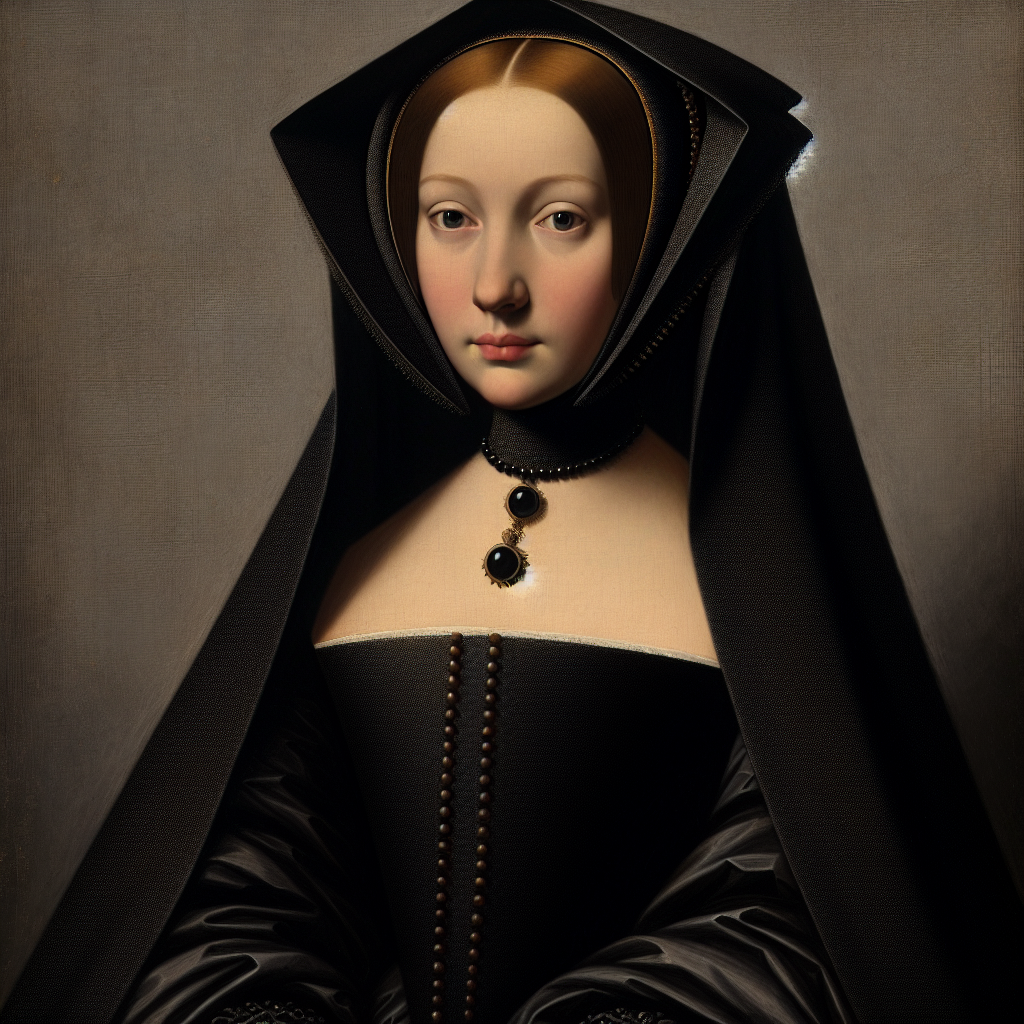
This weekend's entry to #EuropeanBios is #45, Catherine De Medici, born 1519. She ruled France for a solid 30 years through her children after her husband, King Henry 2, died. She has a thoroughly terrible reputation and, unlike other women in history, seems to deserve it.
-
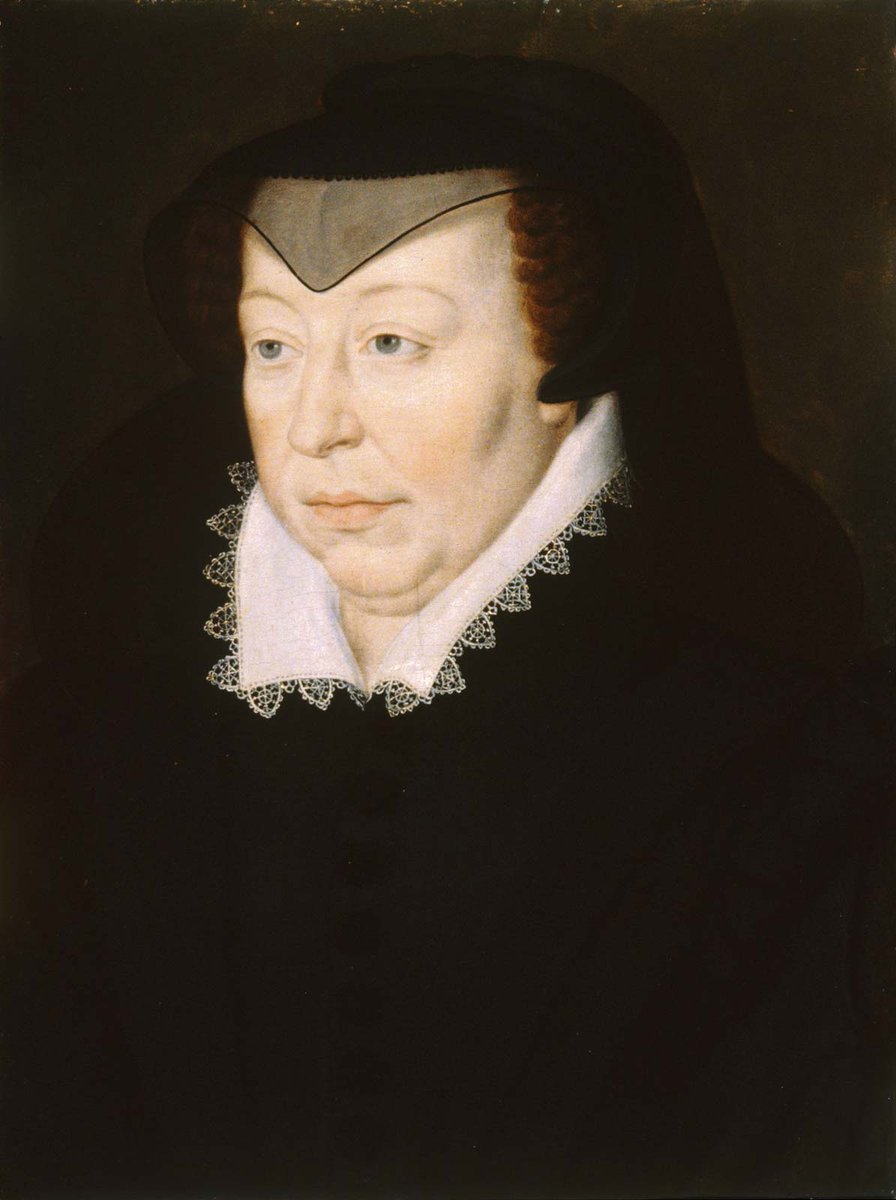
Portrait of Catherine de Medici in mourning dress, artist unknown, c.1570 public domain -
It is *very* difficult to judge historical figures through the lens of history and even harder to judge women, whose legacies are endlessly distorted by sexist male historians. Catherine has a reputation as a schemer, a poisoner, and responsible for a huge religious massacre.
-
But like... she definitely did do all of those things. Her biographer, who like most biographers is a big fan of her subject, spends lots of time talking about how she did lots of other nice things, and how her life was hard, and that's true but ALSO she did lots of murder.
-
One thing she doesn't seem to have a reputation for but absolutely should is being totally shitty to all of her children. She was sort of the political equivalent of a stage mother, throwing her children into geopolitical nightmares out of a genuine wish to see them succeed.
-
An obvious parallel is Queen Isabella of Castille, a previous subject of ours, who was likewise a very impressive political figure but who also, undeniably, murdered a lot of people including poisoning her own brother and kicked off the Spanish Inquisition
-
Random aside: Catherine is politely but universally noted in the historical record as being unattractive by the standards of the day. Needing to compliment something about her, people routinely noted she had nice hands. She compensated by wearing dazzling and expensive outfits.
-
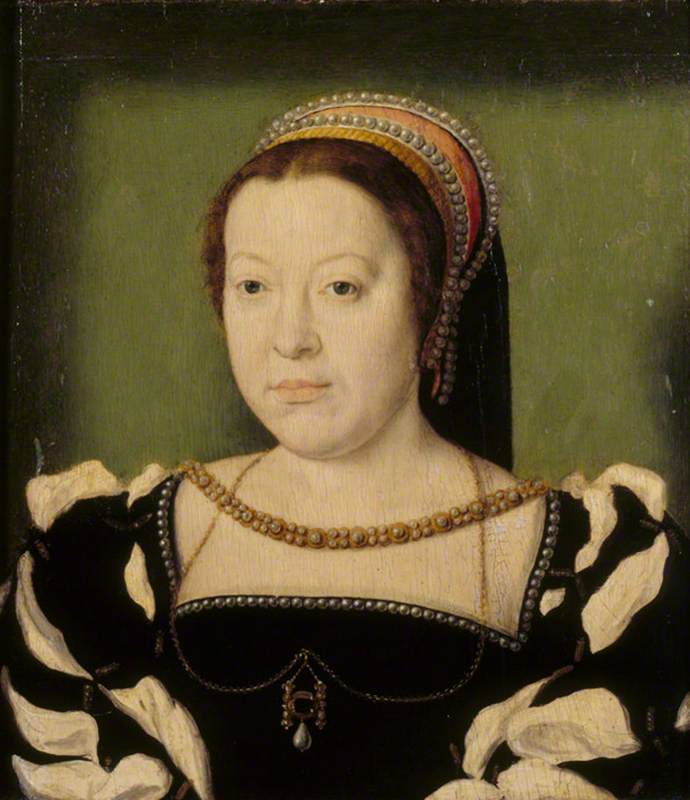
Portrait of Catherine de Medici as a young woman, attributed to Corneille de Lyon, c.1536 public domain -
Catherine was a Medici, a famous clan of fabulously wealthy bankers and merchants from Italy. The Medici were not considered royalty and therefore it is very unexpected that she would eventually become Queen of France, which resulted from a series of accidents.
-
First, the French royal family were broke. Second, her uncle Giulio de Medici became Pope Clement 7. In the nepotism for which 16th century popes were known, Clement arranged for his niece to marry Henry 2, the second son of the king of France, in exchange for an enormous dowry.
-
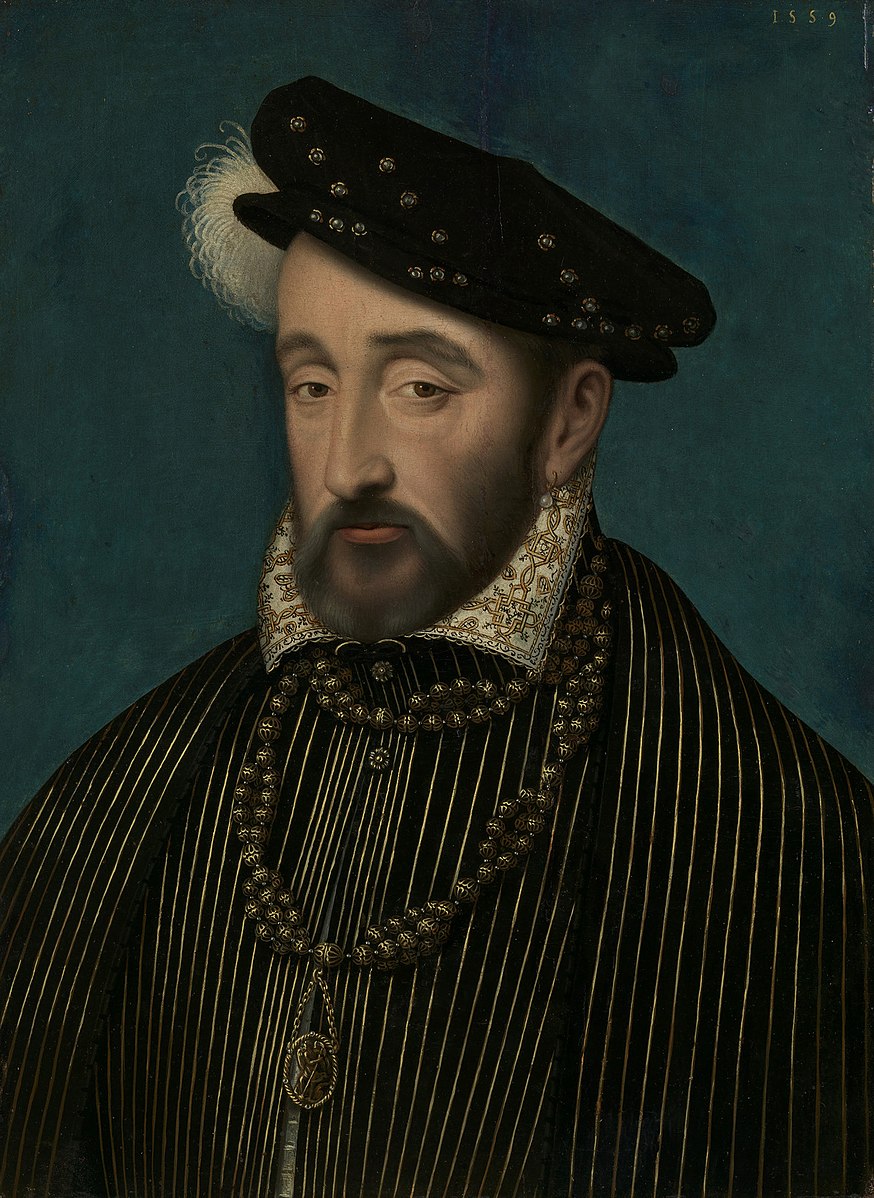
Portrait of Henry II of France, attributed to François Clouet, 1559 public domain -
(Henry, incidentally, had been held for ransom along with his brother as a child from age 7 to 11, by our previous subject Charles V, Holy Roman Emperor. They were held in relative comfort but the experience understandably left him deeply fucked up forever. Charles was awful)
-
Clement inconveniently died almost immediately after the wedding of Henry and Catherine, leaving most of the enormous financial promises he'd made to secure the wedding unfilled. This would normally result in Catherine getting kicked out in favor of some more advantageous bride.
-
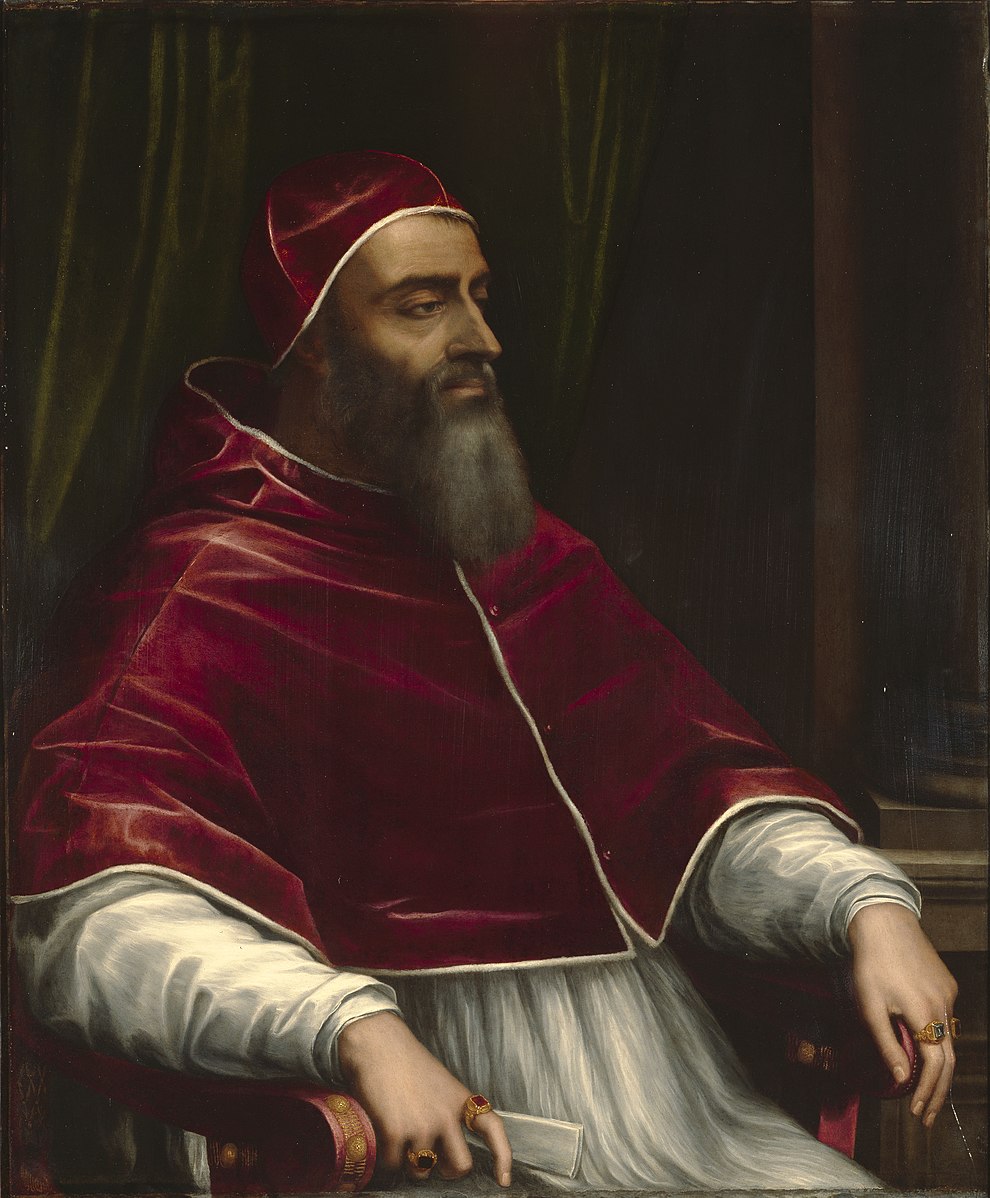
Portrait of Pope Clement VII, Sebastiano del Piombo, c.1531 public domain -
But Catherine, displaying the tenacity she was going to be known for, managed to avoid this. She sucked up to Henry's dad, King Francis, so well that he decided to let her hang around. It didn't matter much; Henry wasn't going to become king because he had an older brother.
-
...or he did until 1536, when his older brother, also called Francis, suddenly died aged 18. This death has been retroactively pinned on Catherine, who later poisoned a bunch of people, but in this case he probably just had tuberculosis and died of that.
-
Suddenly Catherine was wife of the heir apparent, and a lot more important, but in trouble because her marriage to Henry had produced no children. For a full 11 years of marriage they had sex, sometimes observed for official purposes by various nobles, but produced no children.
-
Henry had already had a child as a result of an affair so the infertility was blamed on Catherine. The couple consulted a doctor who "examined their genitals and told them what to do". It was apparently great advice, because Catherine became almost immediately pregnant.
-
In fact Catherine was almost continuously pregnant from 1544-1556, during which time she had 9 children of whom 8 survived to adulthood. What the advice from the doctor was exactly is frustratingly not recorded by history; the mind boggles imagining what they'd been doing wrong.
-
But while Henry did his duty with Catherine procreation-wise his heart belonged to another, much older woman called Diane de Poitiers. Freud would have a field day with a kid who'd spent 4 years in captivity without his mother falling in love with a woman 20 years his senior.
-
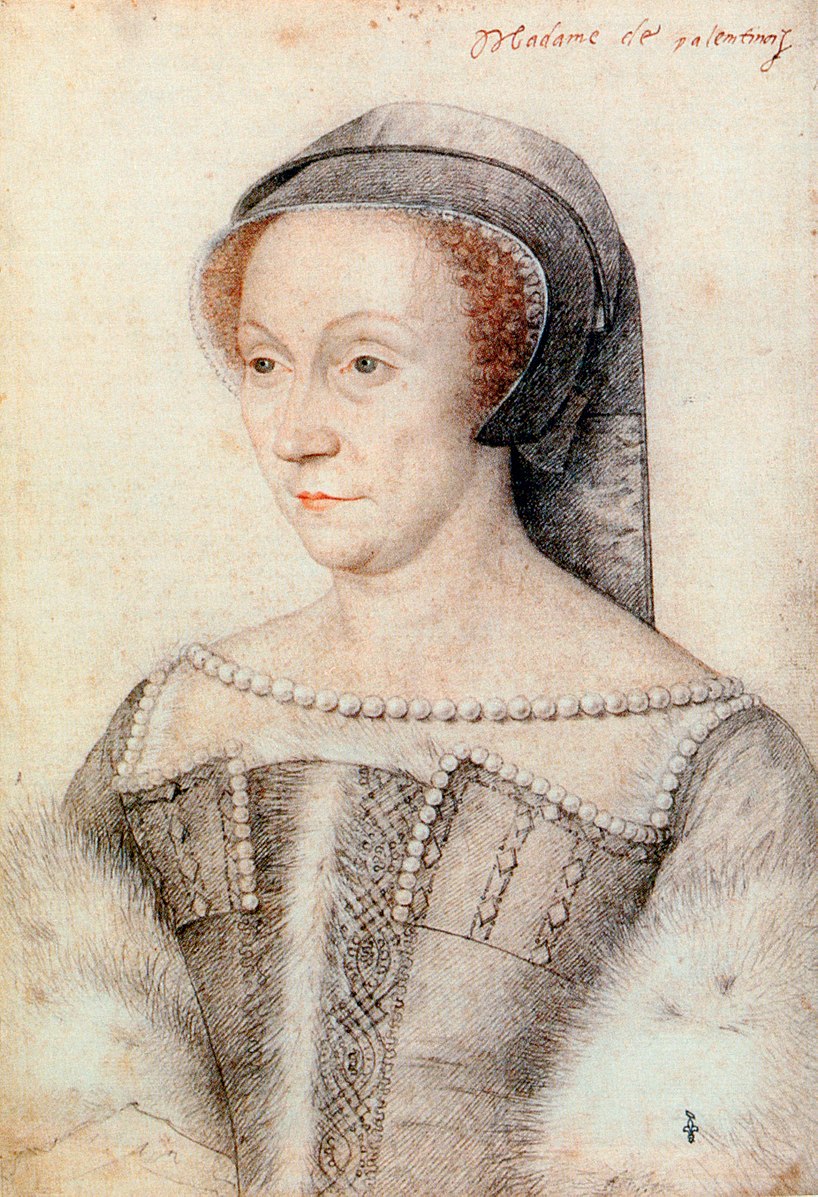
Portrait of Diane de Poitiers, Duchess of Valentinois, attributed to François Clouet, c.1550 public domain -
So when Henry's dad King Francis died in 1547 Catherine became Queen of France, but in reality the woman with all favor of the king was Diane. He placed her first at official events and gave her enormous gifts of land, money and jewelry while mostly politely ignoring Catherine.
-
This situation was resolved, from Catherine's point of view at least, by Henry dying in 1559, 12 years after becoming king, in a jousting tournament. A lance went through his visor and all the way through his brain, and he died in agony over several days. History is gross.
-
So now Catherine, unloved and unwanted bride of the second son, found herself Queen of France as regent for her son Francis, who was 15 at the time. Her first act was to exile Diane of Poitiers and take back all the land and gifts Henry had given her before Henry's body was cold.
-
This event marks a very pronounced half-way mark in Catherine's life. She went from clinging by the tips of her fingernails to tenuous power to being extremely solidly ruler of France, and despite changes in her nominal title she pretty much held on to that power until she died.
-
Like most of Catherine's kids, 15-year-old Francis was not a healthy guy and he died less than a year later. The crown skipped several sisters and landed on Charles 9, also not super healthy and also only 10 years old. This handed Catherine a solid decade of ruling France.
-
Strange fact: Catherine was a huge fan of little people, known at the time as dwarfs. She permanently employed dozens of little people. They were given money and servants of their own, and they constantly appear in Catherine's portraits and in history as her informants and spies.
-
This seems like a weird thing to harp on but it's hard to overstate how often it comes up. Her court was full of little people and they played pivotal roles in various major historic events of her reign. One was part of her wedding, several at her coronation. It was a thing.
-
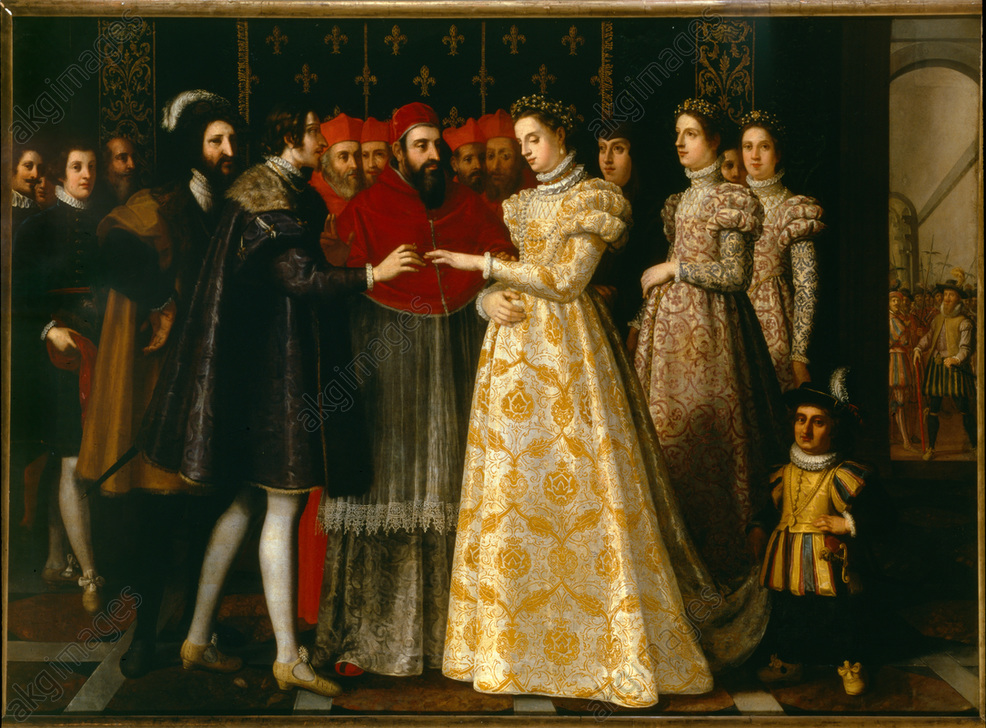
The wedding of Catherine de Medici and Henry II of France, presided by Pope Clement VII, c.16th century public domain -
The biggest challenge in Catherine's life as ruler was the reformation was breaking out across Europe, kicked off by our friend Martin Luther's polite invitation to his colleagues to have a scholarly debate that got way out of hand:
-
Catherine's initial approach to endless tension between French Catholics and French Protestants (called Huguenots) was various levels of tolerance and permissiveness but nobody was having it and things kept escalating until by 1572 she accidentally kicked off a huge massacre.
-
The Saint Bartholomew's Day Massacre started as an attempt by Catherine and her son Charles to murder a bunch of prominent Huguenot leaders to prevent them threatening their power. Those leaders were conveniently staying in Catherine's own palace for a wedding.
-
Catherine kicked off the massacre with an assassination attempt on a prominent military leader, Admiral Coligny. She feared there would be reprisals from the other important protestant leaders, so they sent palace guards to murder all of them in their beds, which they did.
-
The king of France and his mom slaughtering a bunch of helpless protestant nobles did not go unnoticed by the people of Paris, however, who began to murder other protestants in town for the wedding. The violence spread across France, leaving between 5,000 and 30,000 people dead.
-
Look, I don't know about you, but this doesn't seem like sexist historians this time! In addition to bumping off various people with poison Catherine absolutely planned to murder hundreds of wedding guests in her own house, one of whom was her own son in law! She was stone cold.
-
The massacre was a setback for the protestants but didn't stop them, and 2 years later in 1574 Charles himself died, again probably of tuberculosis, meaning yet another of Catherine's sons became king (good thing she had so many!), the extremely gay Henry 3.
-
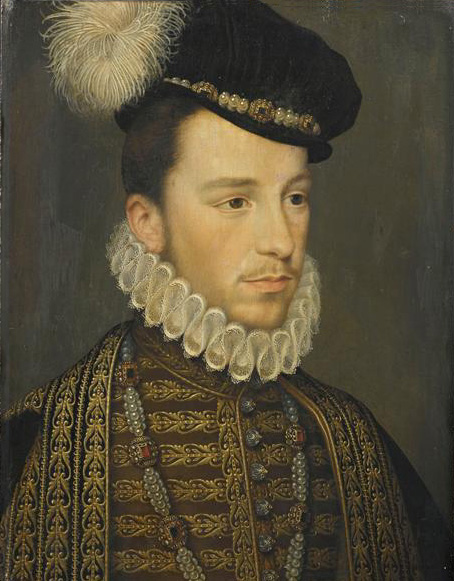
Portrait of Henry III of France, attributed to François Clouet, c.1570 public domain -
Oh yes, Henry 3 was gay. He maintained a stable of handsome young noblemen, called his mignons, with whom he had sex. He dressed flamboyantly even by the standards of a flamboyant age, wearing dangly earrings. He had parties where everyone was encouraged to cross-dress.
-
Catherine was apparently not a fan, but mostly because it messed with her plans. At one point Henry's affection for one of his favorites became so intense it threatened Catherine's hold over Henry. Catherine's very on-brand response was to have the luckless boyfriend murdered.
-
Working with what she had, Catherine did not let Henry's obvious homosexuality prevent her arranging a marriage for him to a Polish princess in order to make him king of Poland. Henry designed his bride's wedding dress and did her hair and makeup on their wedding day.
-
Henry 3 remained king until Catherine's death at the age of 69. As he came into his own her grip on power weakened but she was still very influential right up until her death. (Henry was assassinated less than a year after she died)
-
I really tried to give Catherine the benefit of the doubt. Historians are not kind to women, particularly women who aren't conventionally attractive, and even less to women with power. But Catherine was a ruthless murderer who emotionally and physically abused her own children.
-
She also poisoned people – it's not clear how many, because there was always a plausible alternative suspect or cause of death. This might mean people Catherine got blamed for some deaths she had nothing to do with, or it might mean she was *good* at poison and didn't get caught.
-
Murdering people, even by the thousands, and poisoning people, and being shitty to her kids didn't really set Catherine aside from other European royalty of the time. But she was a lot better at it -- that is to say, a worse person -- than nearly anybody else at the time. Yikes.
-
P.S. Somebody asked what happened to the dude who killed Catherine's husband with a lance through his eye, and you'll never guess how a woman famous for murdering dealt with her feelings about that!
-
P.P.S. I forgot to mention Catherine's Flying Squadron, a group of 80 highly attractive women she kept around court so they could seduce people she needed seduced. They could probably get their own book.
- Previously: Charles V, Holy Roman Emperor
- Next: Ivan the Terrible
- Full list
Text and images copyright © 2020-2023 Laurie Voss
except where indicated
except where indicated